I jarred the first of this year’s spring honey yesterday. Earlier in the season than you might expect - but that’s a story for another post. This morning I’ve just fetched the jars from the warmer - clear, golden, and ready for labelling - and I’m sitting here with a coffee thinking about how many times I’ve actually lifted this stuff.
I suspect most people assume the hard work happens at harvest. The frames come out, the honey spins out, you bottle it up. One lift, maybe two.
They’re off by about forty.
It starts long before harvest
From April through July, I’m at the hives every week - checking the colony is healthy, that the queen’s laying well, that the bees have enough room to keep going. Routine stuff. Except that to get down to the brood box, I have to lift the whole super off first.
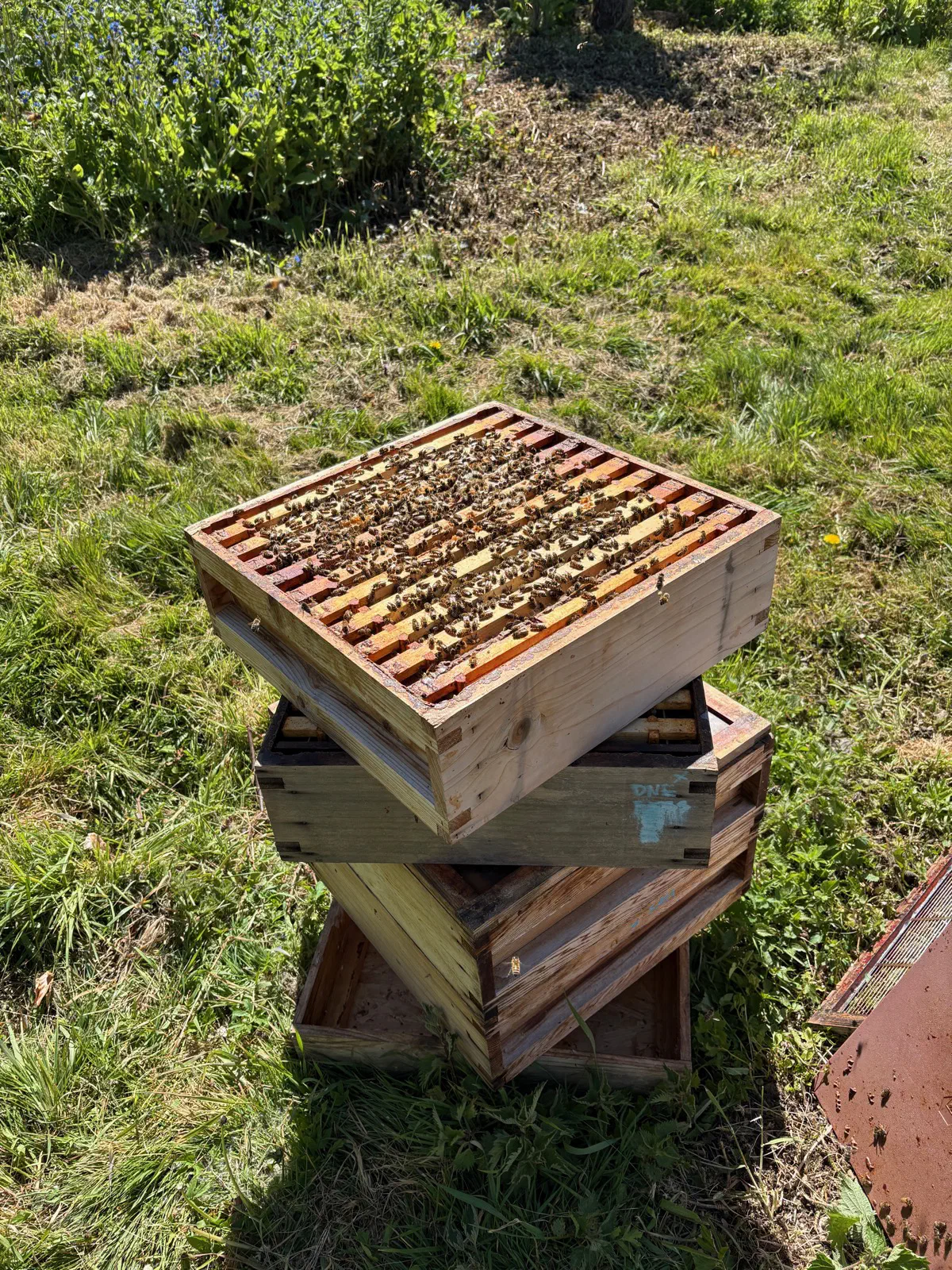
Off, inspect, back on again. Every week. For eight weeks.
That’s sixteen lifts of the super before a single jar has been filled - and those supers get heavier as the season goes on. By midsummer, when the nectar flow is in full swing and the bees have been working flat out for weeks, a full super - ten frames, wooden box and all - weighs around 30 pounds. That’s a proper workout.
I should, by rights, look like He-Man. I don’t.
Then comes harvest
We take two crops - the first in late May or early June from the spring nectar flow, and the second in August from the summer. Each time, the same routine: supers off the hives and onto the back of the truck for the trip to Broads Bee, our local extractor.
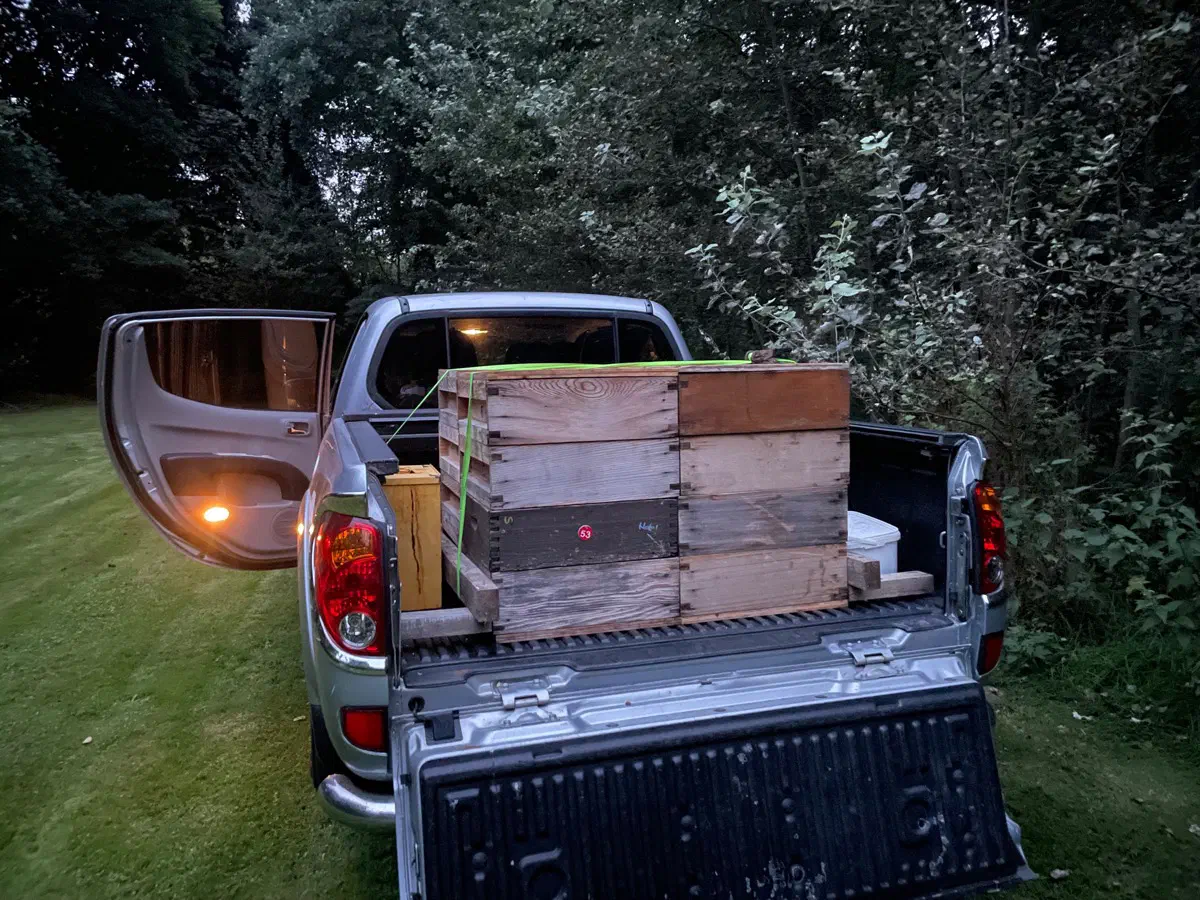
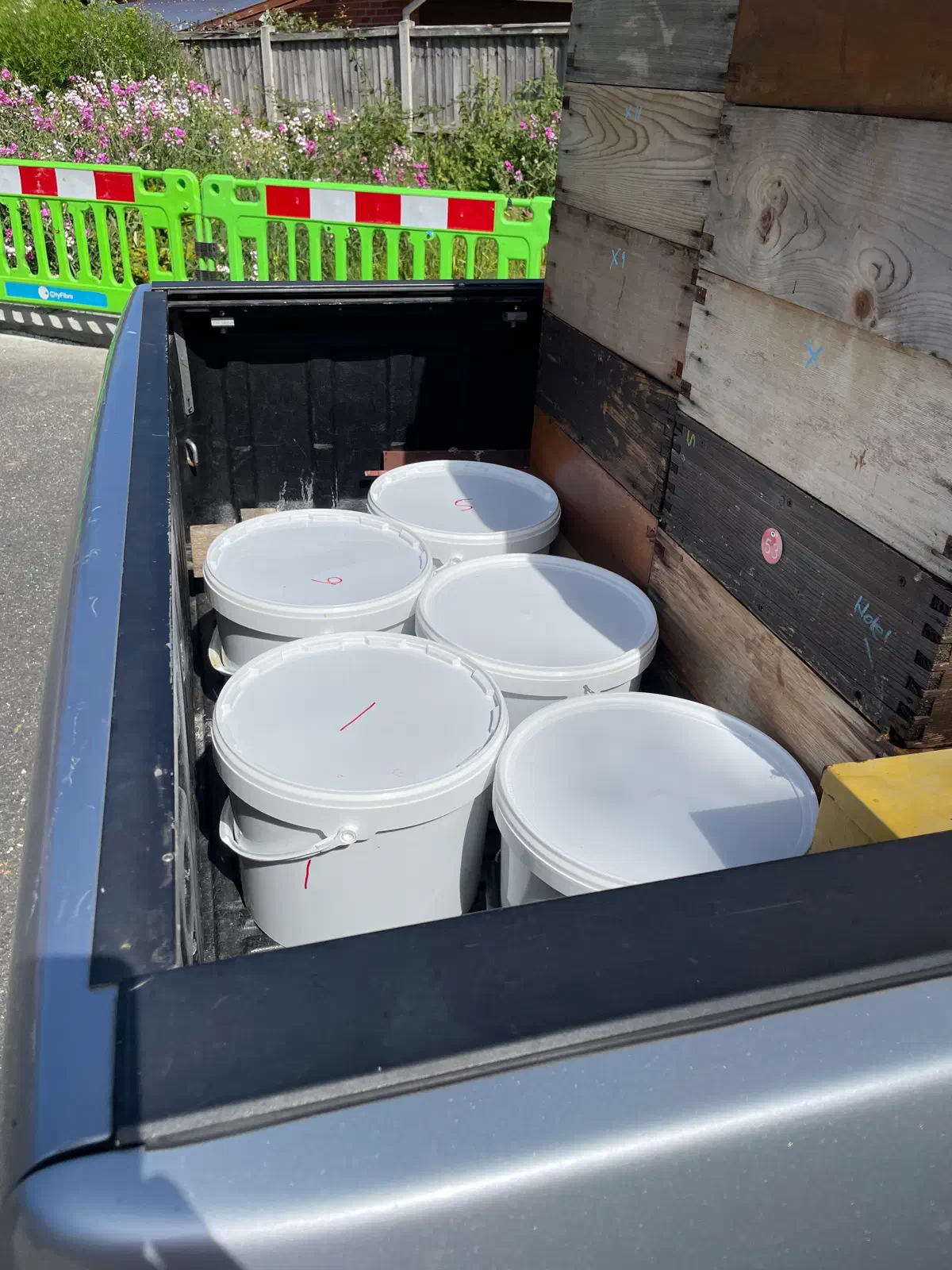
Super off the hive. Super onto the truck. Super off the truck at the other end. I don’t do my own extraction, so a few days later I’m back to collect - now in buckets rather than frames, each one around 30 pounds of honey.
The warming, the waiting, the bottling
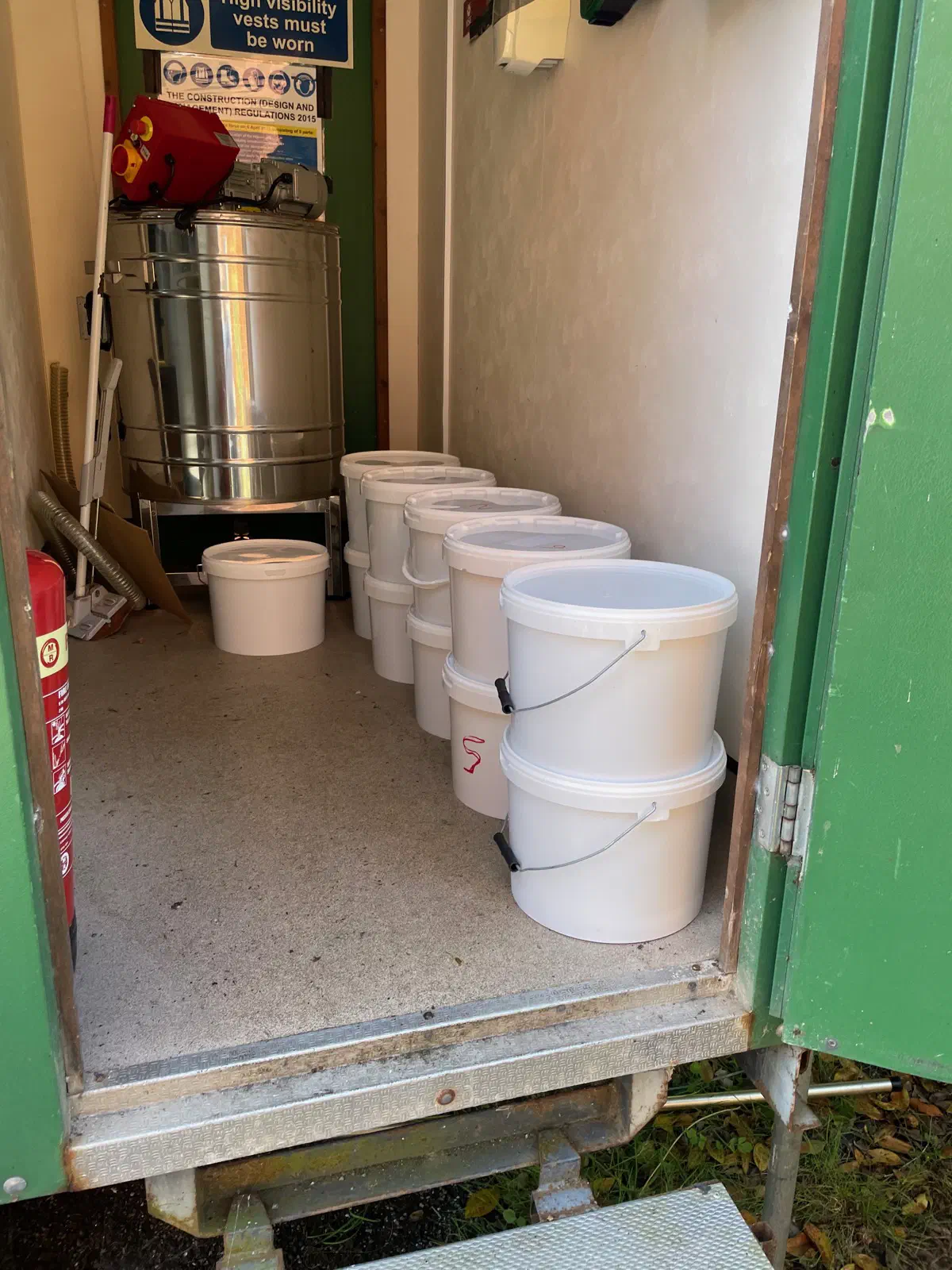
Back home, the buckets go into storage while I get everything ready for bottling.
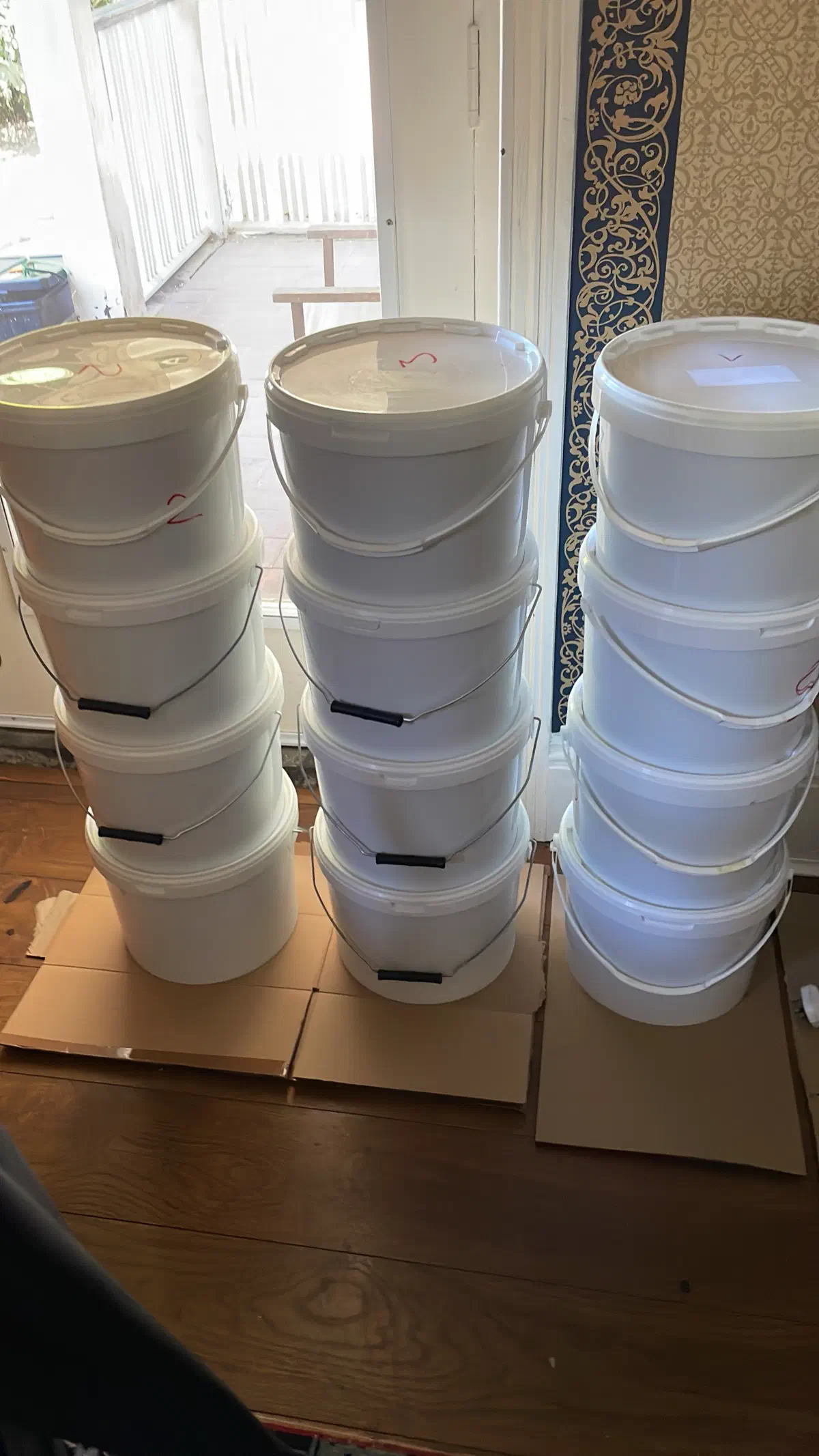
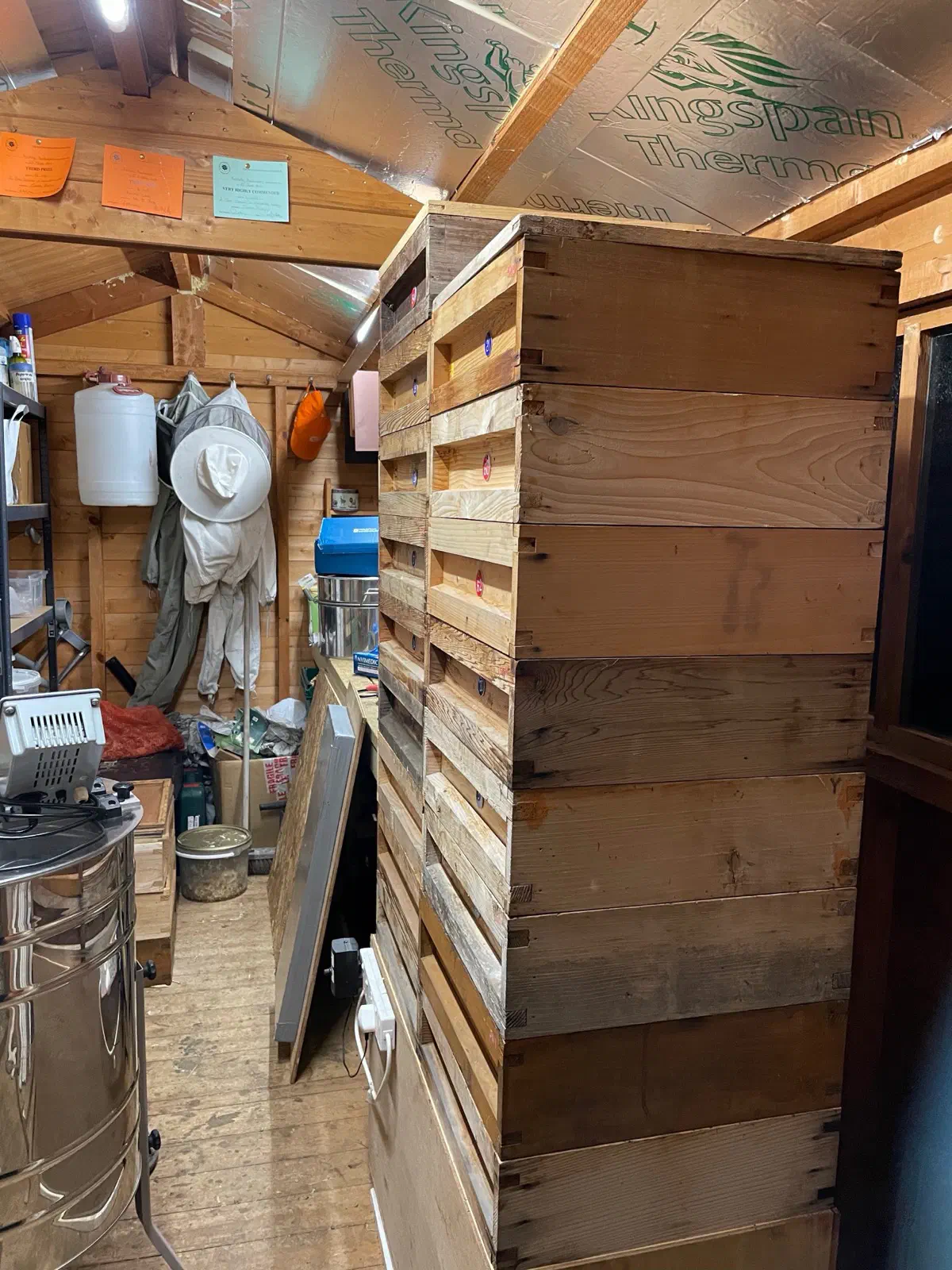
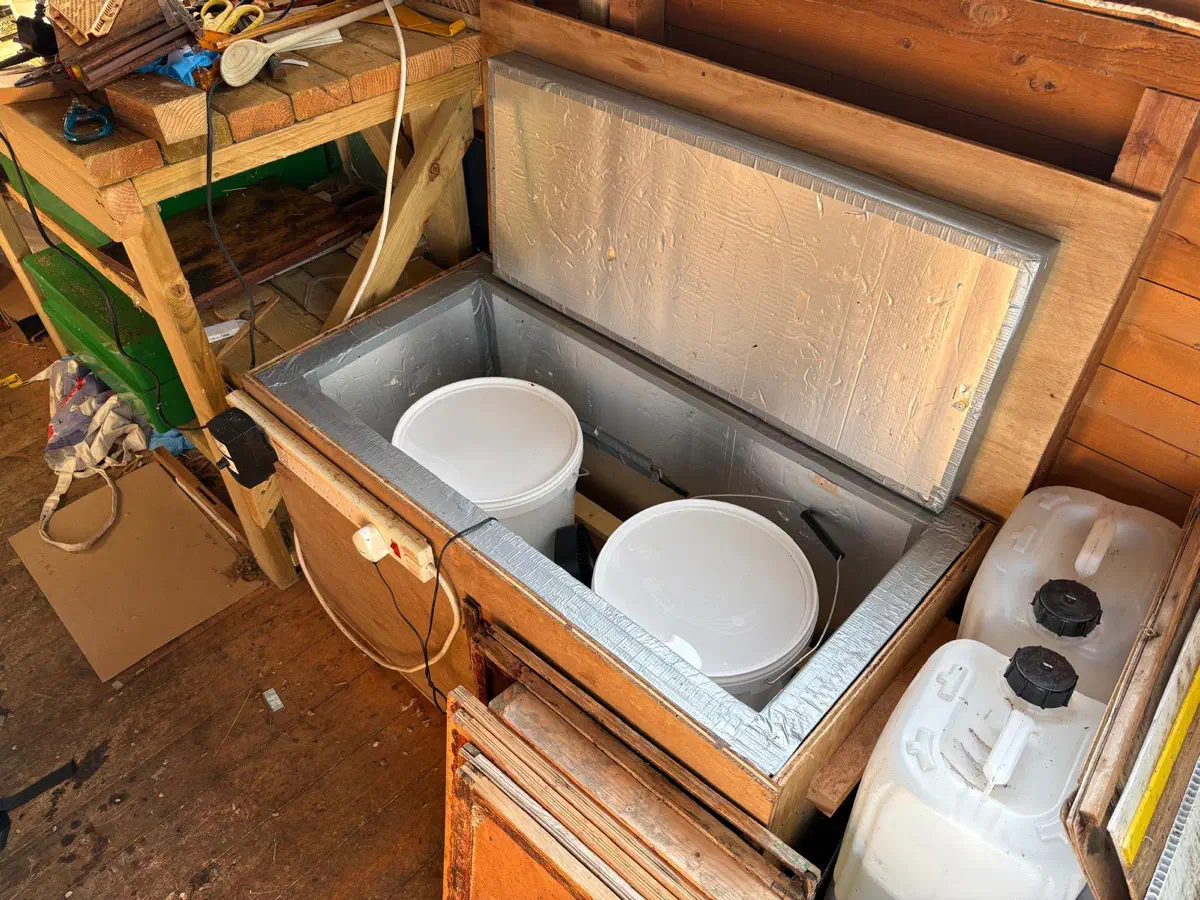
Then they go into the honey warmer to gently liquify before going into the bottling tank - another lift each way. For the spring honey there’s an extra step: the supers themselves sit on top of the warmer first, warming through slowly before the honey is even removed.
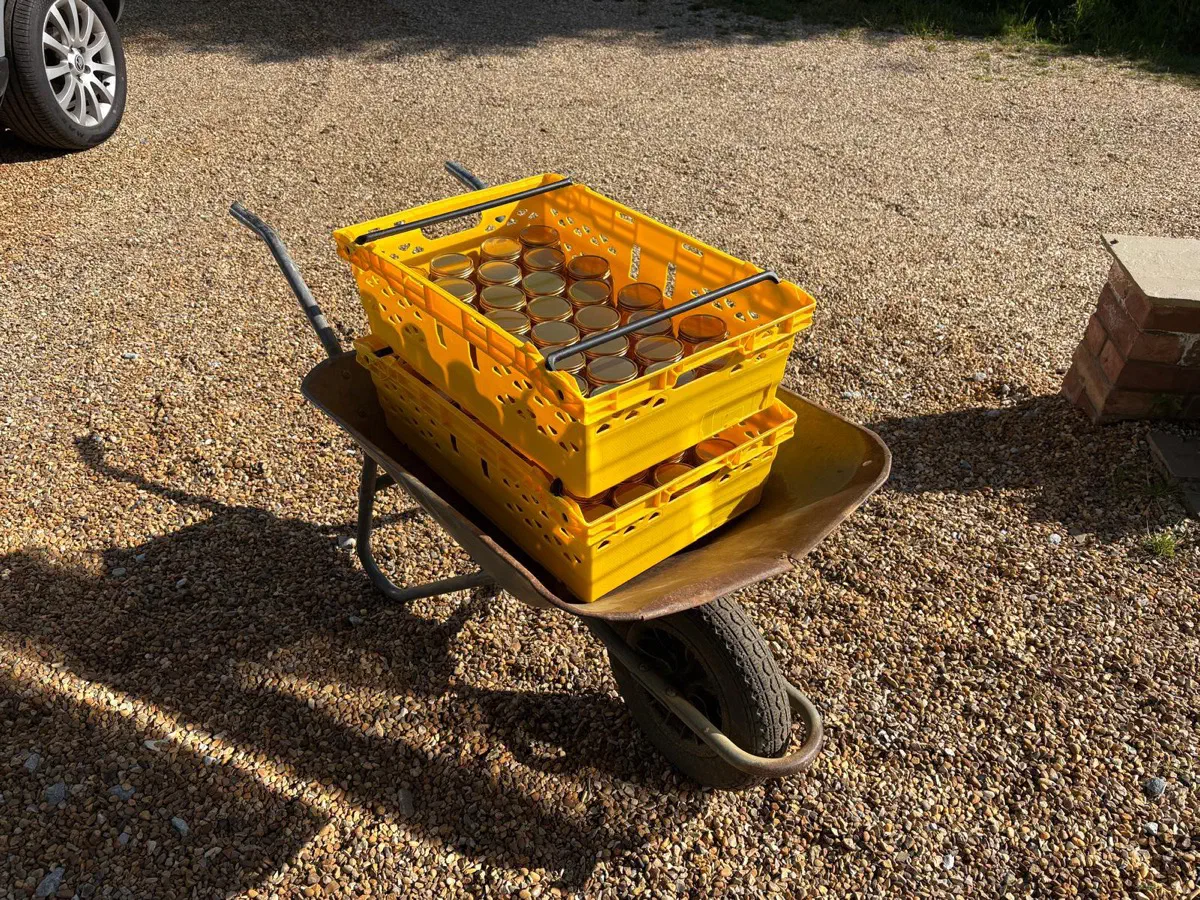
Once it’s jarred, the jars go back into the warmer for the clearing process - one more trip in, one more trip out.
The number
Last year we filled 1,200 jars. 545 kilograms of honey.
By the time each jar reaches you - lifted in supers, in buckets, in jars, across months of inspection visits, harvest runs, warming cycles and bottling days - I’ve moved that honey around 35 times.
The total weight lifted across the whole year, for the whole crop? Roughly 12 tonnes.
Twelve tonnes, to get 545 kilograms of honey to your table.
But here’s the real number
A teaspoon of honey weighs about 7 grams. Each one is the life’s work of twelve bees - a worker honeybee produces roughly a twelfth of a teaspoon over her entire lifetime, from the day she emerges from the comb to the day she wears her wings out and dies.
545 kilograms works out to around 78,000 teaspoons.
Multiply that by twelve.
Nearly a million bees gave their entire working lives to produce last year’s crop.
I’ll stop complaining about my back…
And as it happens - this year’s spring honey is available now. Lighter and more floral than the summer harvest, with all the freshness of an early season. Drop me a message to arrange your order…